


 English
 русский
 Español
 Deutsch
Industry News
A well-organized workshop depends on more than having enough tools. Technicians also need to move equipment between workstations, keep accessories together, and return items to storage without disrupting other tasks. When storage units occupy too much floor space or lack a practical layout, daily work can become less organized. For workshop operators and industrial buyers, selecting a mobile tool cart requires attention to the surrounding workspace, movement patterns, storage access, and long-term maintenance. These details are particularly important when the cart will be used repeatedly across different service areas.
Consider the Workshop Layout Before Choosing Dimensions
A tool cart must fit the space where it will actually operate. Narrow aisles, equipment positioned close together, and limited turning areas can make an oversized cabinet difficult to maneuver, even when its storage capacity appears attractive.
Buyers should measure available clearance around workbenches, service bays, and storage areas before confirming the required cart dimensions. They should also consider the space needed to open drawers and access the side compartment without obstructing nearby equipment.
For manufacturers, this information can guide decisions about cabinet width, handle placement, caster positioning, and overall proportions. A practical design should balance storage capacity with the movement space available in the intended working environment.
Improve Tool Identification and Inventory Control
When several technicians share a workspace, tools can easily be misplaced or returned to the wrong compartment. A consistent storage arrangement makes it easier to identify missing items and maintain an orderly work area.
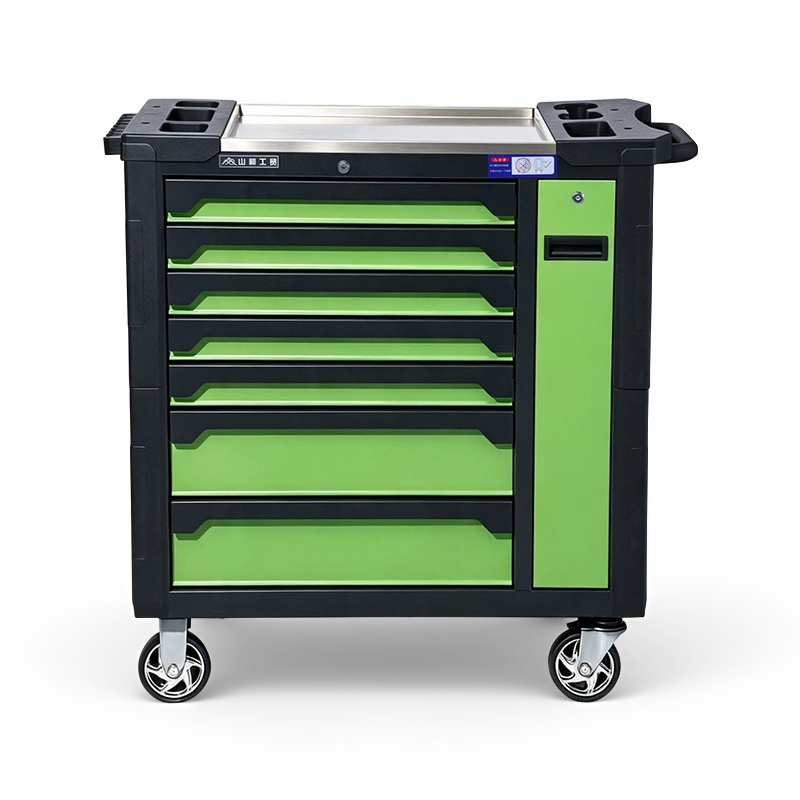
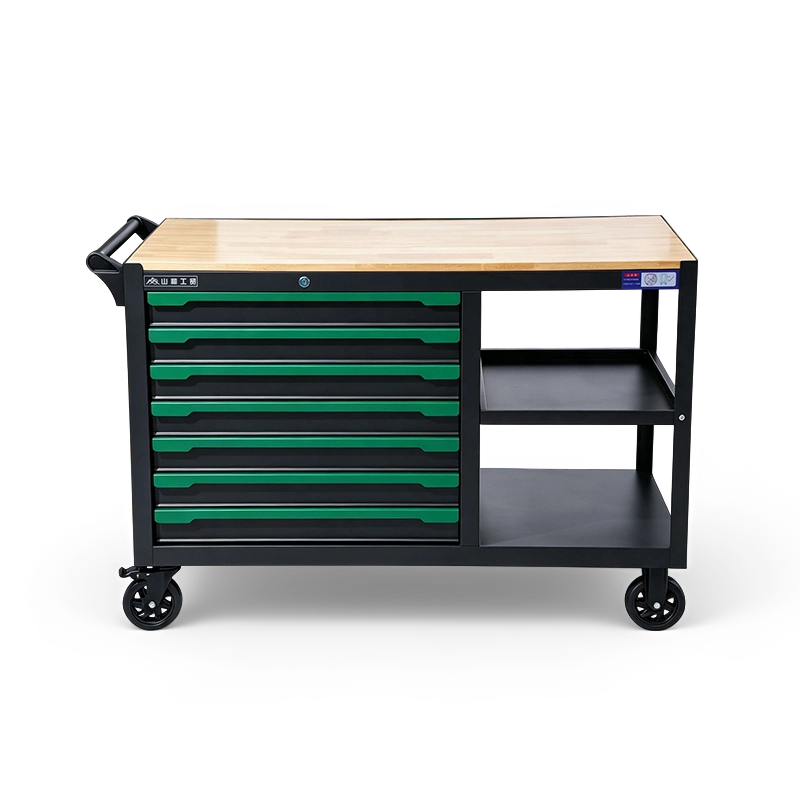
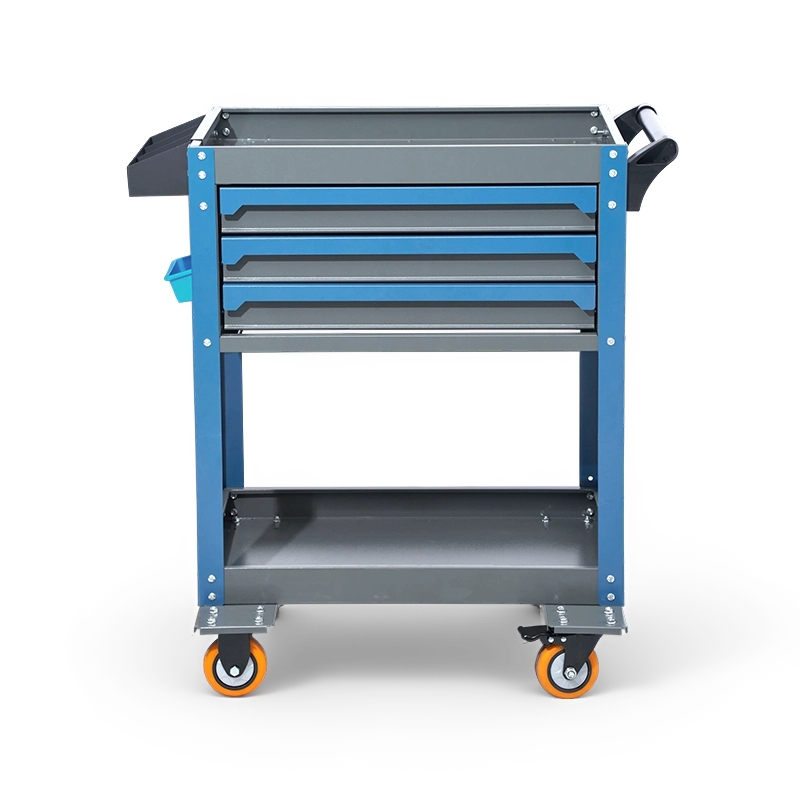
A 7-Drawer Tool Cart with Side Drawer can support this process by allowing different tool categories to be stored separately. For example, users may assign individual drawers to hand tools, measuring instruments, fasteners, or task-specific accessories, depending on the available dimensions.
Manufacturers can support organization through clearly defined drawer dimensions and compatible organizer options where available. Buyers should check whether the internal layout accommodates their existing tools rather than assuming that every drawer can serve the same purpose.
Protect Tools While Moving Between Workstations
A mobile cart is often pushed across different floor surfaces and around other equipment. During movement, loose accessories may shift inside drawers, while poorly secured components can create noise or suffer damage.
Buyers should evaluate drawer closure, handle security, caster movement, and the overall rigidity of the cabinet. Where appropriate, internal organizers or protective liners can help keep smaller items in position.
Manufacturers should also consider how the cart behaves when loaded according to its instructions. Product testing can include checking drawer closure, wheel attachment, and the stability of the assembled unit during normal movement. Users should close drawers before moving the cart and follow the manufacturer's loading guidance.
Pay Attention to Handles, Casters, and Contact Points
The components users interact with most frequently can influence everyday convenience. Handles should be positioned for practical access, while casters need to suit the intended floor conditions and expected load.
Buyers should confirm the cart's specified load capacity, caster configuration, and braking arrangement. The overall loaded weight matters because a cart that is easy to move when empty may require considerably more effort when fully stocked.
From a manufacturing perspective, caster mounting points, handle fasteners, and frame connections should be checked as part of assembly inspection. These areas experience repeated handling and deserve attention during product development and quality verification.
Plan Packaging Around the Finished Structure
Tool carts can include protruding handles, casters, drawer pulls, and other parts that need protection during transportation. Inadequate packaging may result in scratched surfaces, bent components, or damage to movable parts before the product reaches its destination.
Manufacturers should evaluate carton dimensions, internal cushioning, accessory placement, and the protection of finished surfaces. Buyers should clarify whether the product will be shipped assembled or require final assembly after delivery.
Packaging requirements should be confirmed before mass production because they can influence transportation arrangements, warehouse handling, and the receiving process for overseas distributors.
Establish Consistent Quality Checks
A satisfactory sample should provide a clear reference for subsequent production. Manufacturers can document the approved dimensions, material specifications, finish, hardware configuration, and assembly requirements to reduce variation between batches.
Inspection procedures may include checking:
- Cabinet alignment and surface condition
- Handle and caster attachment
- Drawer opening and closing
- Brake operation and wheel movement
- Side compartment fit and accessibility
- Packaging protection and accessory completeness
Recording these checks helps production teams identify recurring issues and maintain more consistent results across repeat orders.
Customize Around Actual Operating Needs
Different buyers may require different colors, drawer arrangements, organizer inserts, labels, or branding. A 7-Drawer Tool Cart with Side Drawer should therefore be evaluated according to the intended users, available workspace, tool inventory, and purchasing requirements.
Manufacturers can review these details before confirming the design and assess whether the requested changes are compatible with production and inspection procedures. Clear specifications make sample approval easier and help ensure that the delivered product matches the buyer's expectations.
A practical tool cart is ultimately defined by how well its storage, movement, construction, and packaging work together. When these factors are considered early, manufacturers and buyers can establish clearer product requirements and support more orderly workshop operations over time.

 18905886877@163.com
  +86-13967066608
 No. 59, Jinxiu Road, Huzhen Town, Jinyun County, Lishui City, Zhejiang Province, China
